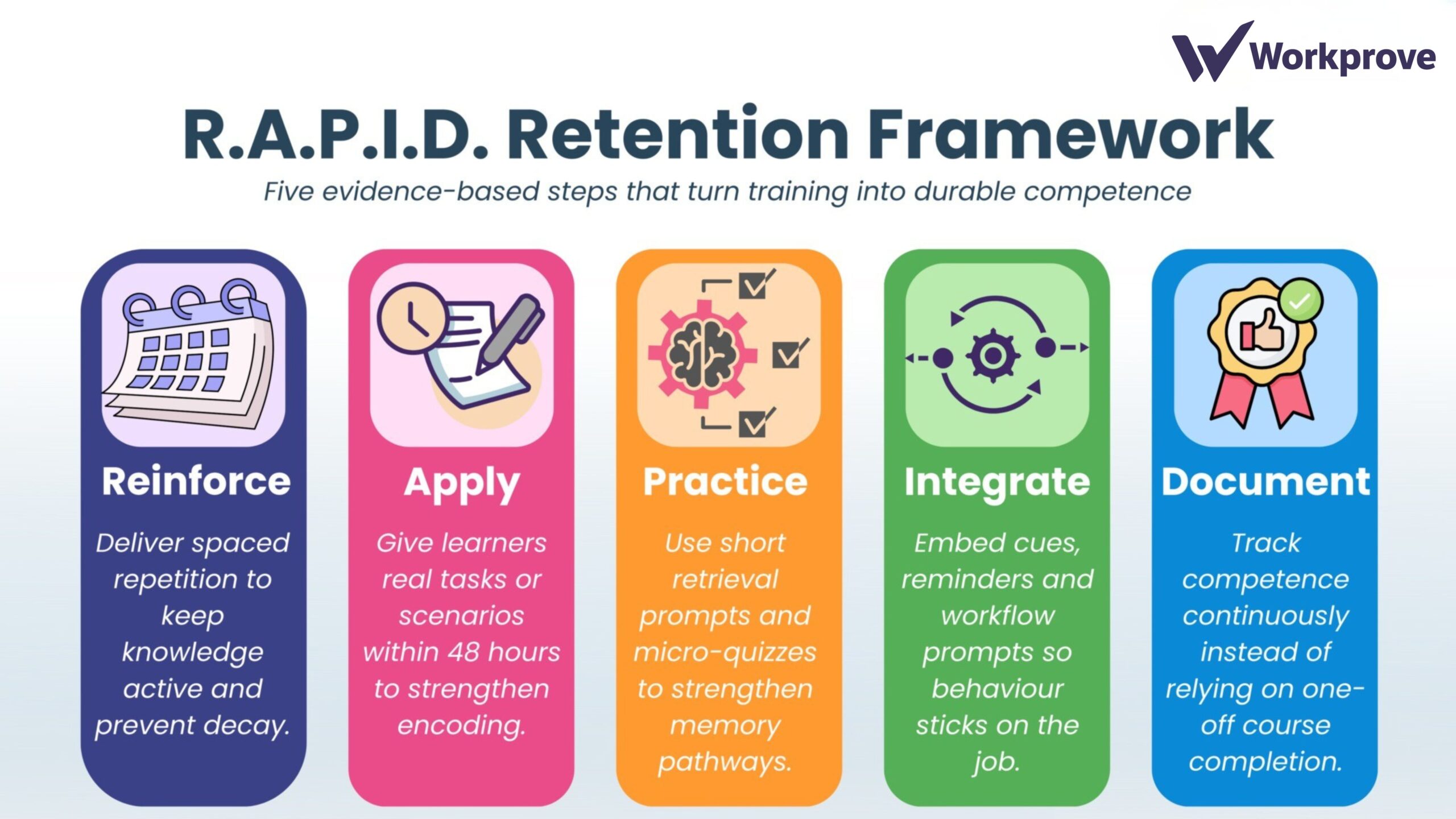
R.A.P.I.D. is simple but grounded in strong empirical findings. The next challenge is operationalising it at scale.
👉 Suggested Reading: To strengthen your retention strategy with accurate skill validation, see our Competency-Based Assessment guide. It shows how to measure competence rather than completion.
How technology fixes the retention problem
Once the principles are clear, the practical challenge emerges: retention cannot be sustained manually. Large workforces need consistent reminders, recurring assessments, contextual cues and reliable competence data. Technology is what allows these evidence-based mechanisms to run continuously and accurately across an organisation.
Reinforce– Automated spacing sequences deliver refreshers at appropriate intervals.
Apply: Digital simulations and workflow-triggered activities encourage real-world practice.
Practice: Short, regular retrieval prompts strengthen memory and reveal early gaps.
Integrate: In-work nudges, reminders and checklists support consistent behaviour.
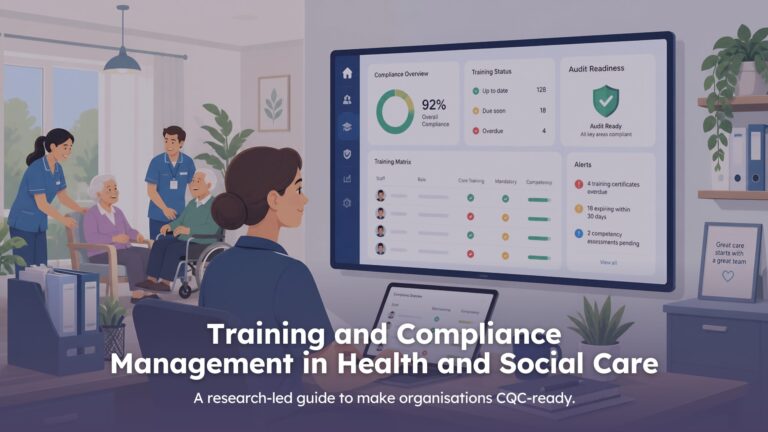
Document: Competence dashboards highlight who is capable, who is at risk and where interventions are needed.
With the right technology, retention ceases to depend on hope and becomes an engineered system. Thus, helps to fix why corporate training fails.
Closing the Gap Between Training and Real Competence
Once organisations accept that retention depends on reinforcement, retrieval, relevance, integration and ongoing competence evidence, the practical question becomes how to operationalise these principles across a real workforce. Doing this manually is unrealistic, particularly when teams are large, roles vary widely, and skills expire at different intervals. This is where a retention-first platform becomes valuable, because it can automate the mechanisms that learning science depends on.
A well-designed system can reinforce learning by automatically resurfacing critical knowledge at spaced intervals, ensuring employees revisit content before it fades. It can also strengthen the application by mapping training to the specific competencies each role demands, making learning more relevant and directly tied to day-to-day work. It can support practice through short, recurring micro-checks that prompt learners to retrieve key concepts, helping to maintain memory and expose early knowledge gaps. Moreover, it can integrate learning into the workflow through alerts, dashboards and manager visibility, so that behaviour is reinforced rather than left to chance. Crucially, it can also document competence over time by capturing sign-offs, assessments and evidence of skill, providing leaders a clear, real-time view of capability and emerging risk.
This is precisely the infrastructure that Workprove provides. By automating reinforcement cycles, linking training to role-specific competencies, including retrieval practice, and offering live visibility of workforce capability, Workprove helps organisations shift from “training completed” to verified competence.
If you want to see how a retention-first approach works in your organisation, you can book a Free Discovery Call with experts to explore what this would look like in practice.
Book a Demo